How to Specify a Whiteboard That Lasts: A Guide to Ceramic Steel
What to include in a whiteboard specification for schools, offices and healthcare, and why ceramic steel surfaces suit high-use spaces.
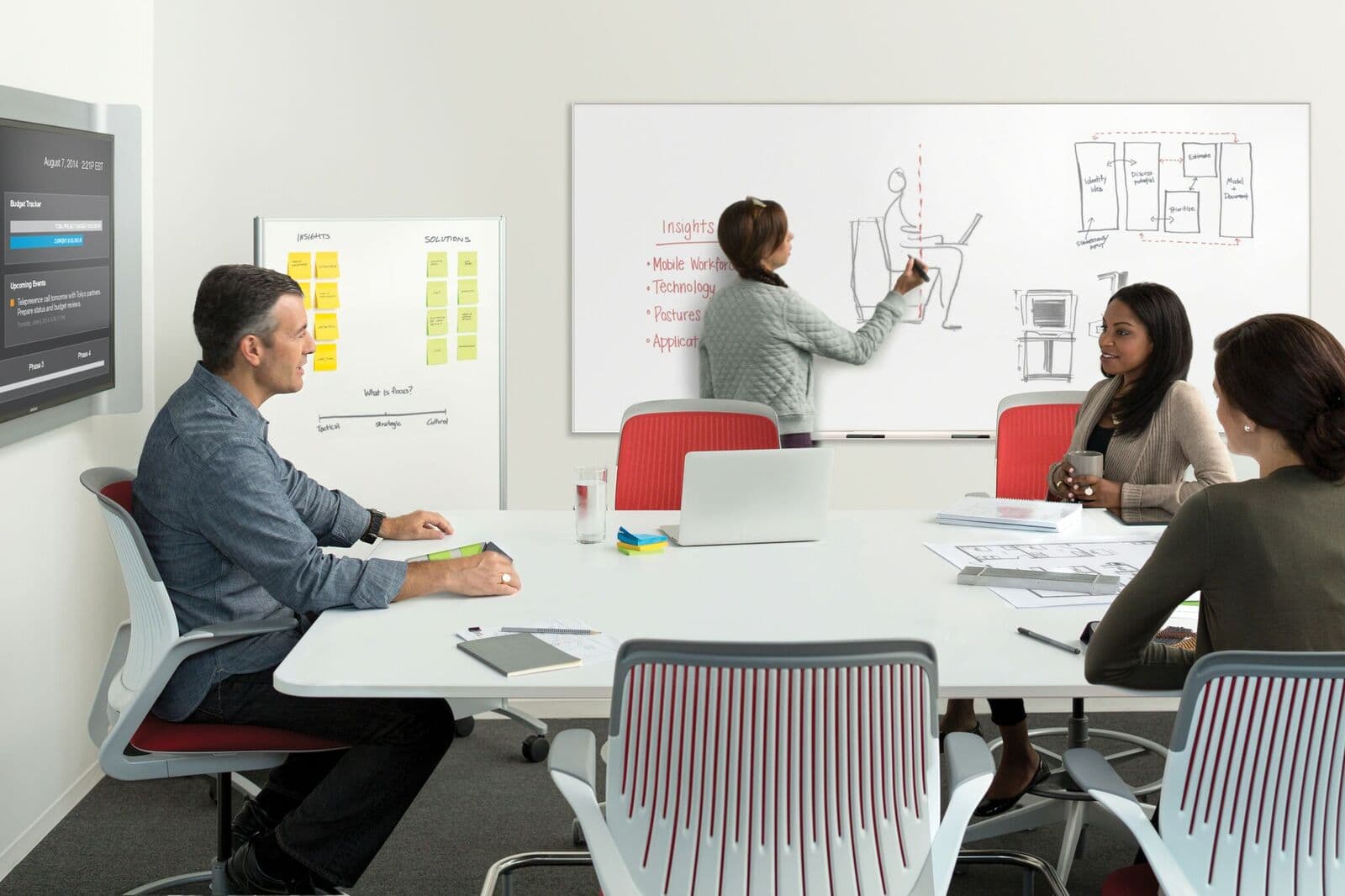
Whiteboards are one of the most-used surfaces in a school or office, and one of the least specified. "Whiteboard, 2400 × 1200" in a schedule leaves the surface quality to chance. Five years later, the board is ghosted, stained and due for replacement. A better specification avoids that.
Why the surface matters
A whiteboard surface has to handle constant writing, erasing and cleaning. Lower-grade surfaces can lose their finish, hold onto marker ghosting and look tired quickly in high-use rooms. In classrooms and meeting rooms used all day, the surface is the product.
What ceramic steel is
Ceramic steel is a porcelain-type ceramic coating fused onto a steel sheet at high temperature. The result is a very hard, smooth writing surface on a magnetic steel base. Gilkon's ceramic steel whiteboards use PolyVision e3 CeramicSteel.
Properties to specify
Durability and writing quality
A fired ceramic surface is designed for heavy daily use and to resist scratching and ghosting in normal use. Specify a ceramic steel writing surface for any high-use teaching or meeting space.
Hygiene and cleaning
PolyVision describes its e3 CeramicSteel as resistant to fire, chemicals and bacteria. That makes it a strong choice for healthcare, aged care and laboratory settings as well as schools, where surfaces are cleaned frequently.
Projection
A low-sheen surface reduces glare, so the board can double as a projection surface. That's useful in rooms with short-throw projectors.
Sustainability
PolyVision e3 CeramicSteel is described as 99.9% recyclable and Cradle to Cradle Certified Silver. Combined with a long service life, that helps projects with sustainability targets.
Sizes and walls
Gilkon supplies ceramic steel whiteboards in defined product sizes. Use the whiteboard configurator to arrange those boards on a wall layout and specify the board products required for your room. The wall canvas helps plan the layout; the ceramic steel whiteboards are the products being specified.
When planning a wall, consider:
- Height: the writing zone should suit the users. Lower for primary students, higher for adults.
- Joints: where panels meet, and how trims are finished
- Accessories: pen trays and mounting for displays
- Adjacent surfaces: pairing whiteboards with Gilkon pinboards (Vertiface fabric in 35 colours) gives a room both writing and display space
A sample specification clause
You can adapt this for your schedule:
Whiteboard: Gilkon ceramic steel whiteboard (or approved equivalent) with PolyVision e3 CeramicSteel writing surface, low-sheen finish suitable for projection, magnetic steel substrate. Size and layout as per drawings. Supplied with manufacturer's mounting system and pen tray. Australian-manufactured.
Including "or approved equivalent" keeps procurement open, while naming the surface sets the standard any alternative has to meet.
Made in Australia
Gilkon products are designed and manufactured in Australia by OPIE Manufacturing Group at Emu Heights, NSW, under an ISO 9001:2015 quality system. That means local support, practical customisation and supply that doesn't depend on a shipping container.
Frequently asked questions
Is ceramic steel more expensive than a standard whiteboard? Usually it costs more up front. In high-use rooms, though, a longer-lasting surface can mean fewer replacements over the life of the building. Compare whole-of-life cost, not just purchase price.
Can I use magnets on a ceramic steel whiteboard? Yes. The ceramic surface is fused to a steel substrate, so magnets hold to it.
How should ceramic steel be cleaned? Follow the manufacturer's cleaning guidance. Regular dry erasing, plus periodic cleaning with an approved whiteboard cleaner, keeps the surface at its best.
Can whiteboards be made to custom sizes? Talk to the Gilkon team about non-standard requirements. For standard products, start by selecting and arranging ceramic steel whiteboards in the configurator.
Are Gilkon whiteboards made in Australia? Gilkon boards are manufactured in Australia by OPIE Manufacturing Group, using PolyVision e3 CeramicSteel as the writing surface.
Ready to specify? Configure it and download the BIM file, or contact the Gilkon team.
