Designing a Lectern for Collaborative Teaching: The University of Canberra Story
How the University of Canberra found a height-adjustable lectern centre for collaborative teaching, and what it shows about learning space hardware.
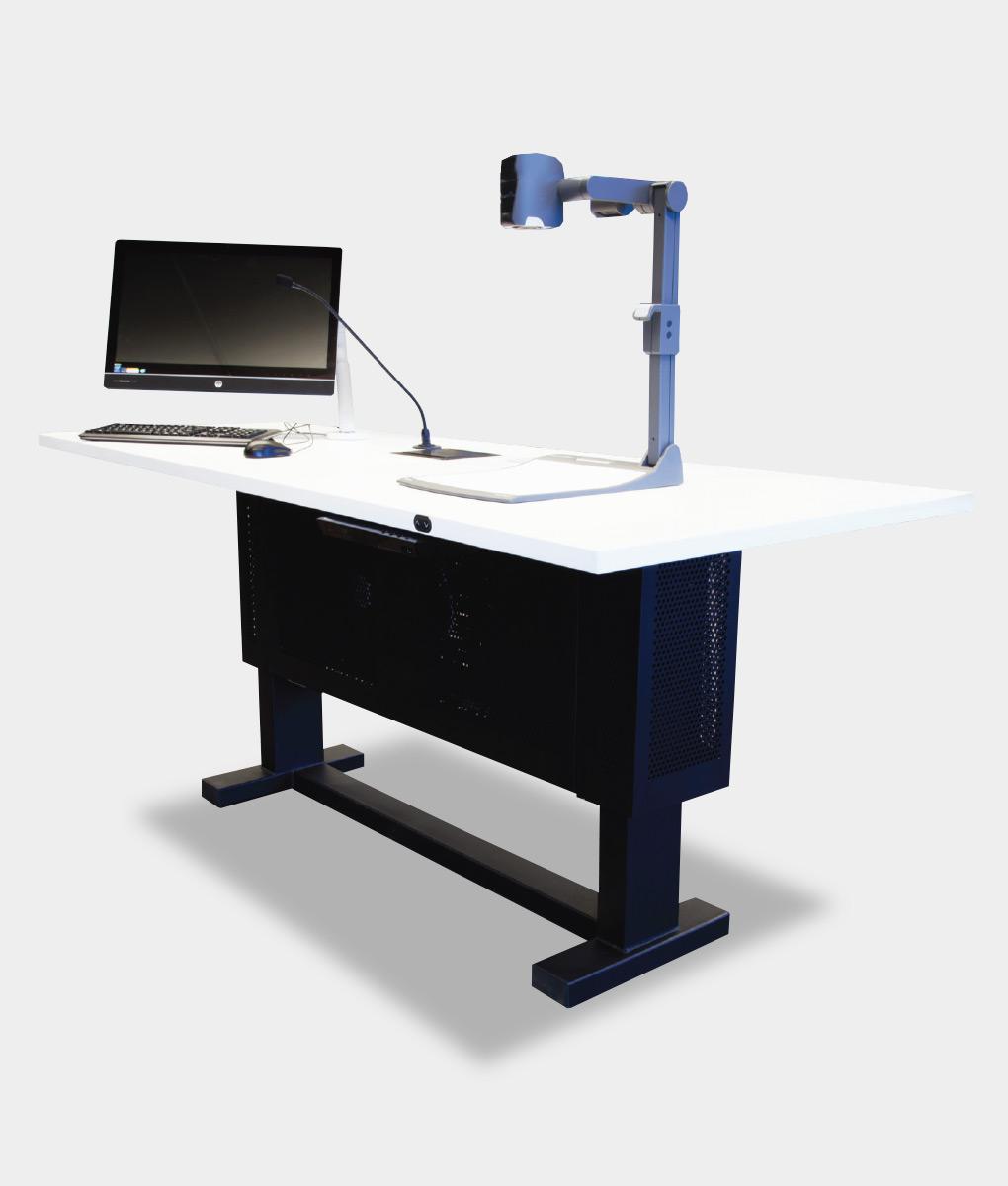
Teaching styles have changed faster than teaching furniture. Lecture-style rooms built around a fixed lectern don't suit collaborative, discussion-based learning. The University of Canberra spent more than two years looking for a better answer. Here's how it found one.
A two-year search
Teaching and Learning staff at the University of Canberra wanted a lectern solution for today's collaborative teaching styles. For more than two years they searched without success, until, almost by accident, they came across a possible solution at the University of Technology Sydney (UTS). Read the original case study.
Three groups, three requirements
The project had three stakeholder groups with different priorities:
- Teaching staff wanted flexibility, mobility and simplicity.
- The AV team wanted adequate ventilation for the IT equipment inside.
- Estate Management wanted aesthetic appeal.
Any one of these is easy to meet. All three together is harder, and it's the reason so many lecterns end up as compromises.
The solution
The UTS lectern centre is freestanding and can be used for a standard presentation or in a breakout space, needing only power. It can be electronically raised to lectern height or lowered, so teaching staff and students can sit together for more collaborative interaction. Some units were designed to pivot, for modern learning spaces that are configured in many different ways. The design also caters easily for teachers and students with special needs.
Gilkon's role: making it makeable
A good design isn't automatically easy to manufacture. Gilkon brought its manufacturing know-how to the lectern design, making sure the components were easy to make and the manufacturing process cost-efficient.
That collaboration worked both ways. As UTS AV Project Manager Dale Arnull put it: "UTS were a great partner in the prototyping process. Their designer was completely open to our requested manufacturing and design changes."
This is design for manufacture in practice: keep the designer's intent and adjust the details so the product can be made reliably, at a sensible cost, in the quantities needed.
Lessons for learning space projects
- Talk to all stakeholders. Teaching, AV and estates teams each see different risks. Address all three from the start.
- Look at what already works. The best solution may already exist on another campus.
- Design for flexibility. Height adjustment and mobility let one piece of furniture support several teaching modes.
- Plan for the equipment inside. Ventilation, cable management and service access matter as much as appearance.
- Involve the manufacturer early. Prototyping with a manufacturer avoids costly changes later.
- Design for everyone. Height adjustment helps staff and students with different needs.
Today
The University of Canberra project was delivered under Wilson & Gilkes, before Gilkon became part of OPIE Manufacturing Group. Today, Gilkon is manufactured at OPIE's Emu Heights facility in Western Sydney, alongside the group's other brands. That includes Lectrum, which specialises in lecterns.
OPIE's in-house engineering, laser cutting, folding, welding, powder coating and assembly mean learning-space furniture and AV hardware can still be designed, prototyped and refined in close collaboration with universities and their designers.
For classrooms and learning spaces, Gilkon offers mobile display stands, height-adjustable wall mounts, ceramic steel whiteboards and a configurator for selecting and arranging ceramic steel whiteboards.
Frequently asked questions
Can lecterns be customised for our campus? Talk to us. Custom finishes, sizes and equipment fit-outs are possible through OPIE's in-house manufacturing.
What equipment can a lectern centre hold? Typically a PC, a control system and AV switching. Make sure ventilation and cable management are designed for the equipment you'll use.
Do height-adjustable lecterns need anything more than power? The UTS lectern centre needed only power, which made it easy to move between presentation and breakout spaces. Data and AV connections depend on your room design.
Who should be involved in choosing a lectern? Teaching staff, AV and IT teams, estates and facilities, and accessibility advisors.
Designing a new learning space? Talk to us early. The best results come from collaboration.
